
Women’s Hiking Shoes That Keep Feet Comfortable for Miles
As an Amazon Associate I earn from qualifying purchases. Some links may earn us a commission at no extra cost to you.
The best women’s hiking shoe should fit securely, grip the terrain underfoot, and provide enough protection without feeling unnecessarily heavy. My five picks cover technical trails, long day hikes, lightweight travel, wide toe boxes, and traditional hiking comfort.
Top picks
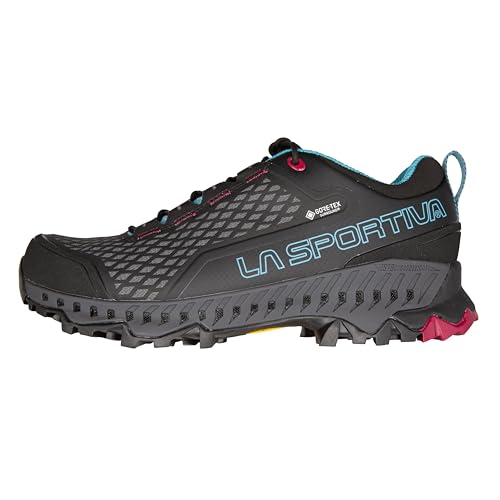
La Sportiva Spire GTX — Best overall
The Spire GTX is my strongest all-around pick for rocky routes, steep descents, wet weather, and hikers who value stability more than minimum weight.
Why it wins: The women’s model combines a Vibram XS Trek outsole with an Impact Brake System, a supportive STB control structure, and GORE-TEX Surround ventilation channels. It weighs approximately 13.1 ounces per shoe and is offered in European sizes 36–43.
Independent women’s testing awarded it especially strong marks for traction, support, waterproofing, and immediate comfort. A current 2026 roundup also selected it as a leading women’s hiking shoe for stability and trail grip.
Pros
- Excellent traction on rock and steep terrain
- Stable platform for technical hiking
- Waterproof GORE-TEX Surround construction
- Substantial toe and heel protection
Cons
- Heavier than trail-runner-style shoes
- Performance fit may feel snug
- Premium construction may be excessive for easy trails
Trade-offs / Who should skip: The Spire can disappoint on soft dirt and deep mud, where its rock-focused tread is less dominant. It is also a poor match for hikers who need a broad forefoot or prefer highly flexible, minimal shoes.
Scores: Performance 4.9/5 | Traction 4.9/5 | Ease of Use 4.3/5 | Value 4.1/5
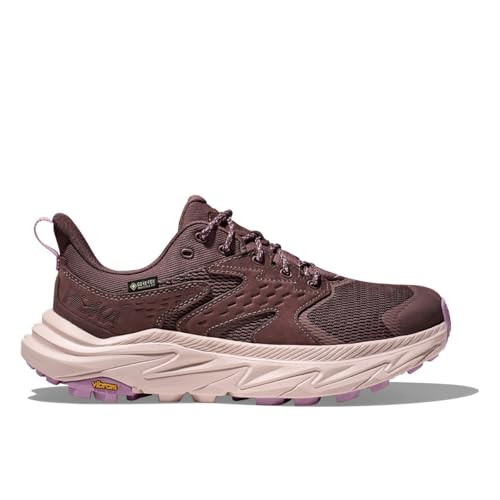
HOKA Anacapa 2 Low GTX — Best for cushioned long hikes
The Anacapa 2 Low GTX is my pick for long day hikes and established trails where cushioning, waterproofing, and a broad, stable base matter most.
Why it wins: HOKA lists the women’s shoe at approximately 12.4 ounces with a 10 mm heel-to-toe drop. It uses a J-Frame structure to limit excessive inward rolling and a wide Active Foot Frame base to add moderate stability.
The shoe also combines a GORE-TEX Invisible Fit lining with a Vibram Megagrip outsole. Independent testing found it especially comfortable and dependable for accumulating long miles, although it is better suited to established trails than highly technical scrambling.
Pros
- Generous cushioning for long trail days
- Wide, inherently stable platform
- Waterproof GORE-TEX construction
- Vibram Megagrip rubber outsole
Cons
- Less precise on highly technical terrain
- Bulkier than lightweight trail shoes
- Waterproof upper can feel warm
Trade-offs / Who should skip: I would skip it for fast scrambling, narrow ledges, or hikers who want strong ground feedback. Its cushioning and platform are designed more for comfort over distance than sharp, precise foot placement.
Scores: Performance 4.6/5 | Traction 4.5/5 | Ease of Use 4.6/5 | Value 4.2/5
Merrell Moab Speed 2 — Best lightweight hiking shoe
The Moab Speed 2 is my lightweight choice for fast day hikes, warm conditions, travel, and maintained trails.
Why it wins: Merrell combines a FloatPro foam midsole, a flexible stability plate, and a Vibram TC5+ outsole with 4 mm lugs. The women’s version weighs approximately 9.7 ounces per shoe, has a 10 mm drop, and places more foam underfoot than the previous generation.
Independent women’s testing found it lightweight, breathable, grippy, and ready to hike without a long break-in period. Its soft upper and flexible platform make it feel more athletic than a traditional leather hiker.


Pros
- Lightweight and flexible underfoot
- Strong grip on maintained trails
- Breathable non-waterproof upper
- Available in standard and wide constructions
Cons
- Less supportive under heavy loads
- Moderate lugs struggle in deep mud
- Standard fit may feel narrow
Trade-offs / Who should skip: It may disappoint on repeated off-trail travel, deep mud, heavy backpacking trips, or routes that demand a rigid edging platform. The non-waterproof version is also a poor match for persistent rain, although it is better ventilated in warm weather.
Scores: Performance 4.5/5 | Traction 4.6/5 | Ease of Use 4.8/5 | Value 4.6/5
Altra Lone Peak 9+ — Best for a roomy toe box
The Lone Peak 9+ is my choice for hikers who want natural toe splay, a level platform, and a lighter shoe for dry-weather hiking or thru-hiking.
Why it wins: The women’s model uses Altra’s roomiest Original FootShape design, a zero-millimeter heel-to-toe drop, a 25 mm stack, and a Vibram Megagrip outsole. It weighs approximately 9.3 ounces per shoe.
The “9+” designation matters. It identifies the version with Vibram Megagrip rather than the standard Lone Peak 9 outsole. Testing found the 9+ tread effective for climbing and controlled descending, while the broad platform provides good ground contact and maneuverability.
No products found.
Pros
- Spacious, foot-shaped toe box
- Vibram Megagrip wet-and-dry traction
- Lightweight for long-distance hiking
- Stable 25 mm platform
Cons
- Zero drop requires gradual adaptation
- Limited traditional arch structure
- Less secure for narrow feet
Trade-offs / Who should skip: I would not move directly into this shoe from a high-drop design before allowing the calves and Achilles tendon time to adapt. It may also disappoint hikers who want a rigid chassis, pronounced arch support, or a narrow performance fit.
Scores: Performance 4.5/5 | Traction 4.7/5 | Ease of Use 4.3/5 | Value 4.4/5
Merrell Moab 3 — Best value
The Moab 3 is my value pick for beginners, weekend hikers, and anyone who prefers the planted feel of a traditional hiking shoe.
Why it wins: The non-waterproof women’s model combines a leather-and-mesh upper, a contoured removable footbed, heel cushioning, a protective toe cap, and a Vibram TC5+ outsole. It uses 5 mm lugs and an 11.5 mm drop, with wide sizes available.
Current women’s comparisons continue to recommend the Moab 3 for immediate comfort, grip, warm-weather breathability, and dependable value. It is heavier and less responsive than the Moab Speed 2, but the more traditional construction feels reassuring on ordinary day hikes.

Pros
- Stable, traditional hiking-shoe feel
- Five-millimeter trail lugs
- Wide sizes available
- Little break-in required for many hikers
Cons
- Heavier than athletic hiking shoes
- Non-waterproof upper absorbs water
- Less energetic at faster hiking speeds
Trade-offs / Who should skip: I would choose another model for speed hiking, repeated running, or persistently wet routes. The ventilated version is most appropriate for dry and warm conditions; separate waterproof versions can fit differently.
Scores: Performance 4.4/5 | Traction 4.5/5 | Ease of Use 4.7/5 | Value 4.9/5
Quick compare
- Best overall: La Sportiva Spire GTX — maximum stability and technical-trail traction.
- Best for cushioned long hikes: HOKA Anacapa 2 Low GTX — comfortable over long distances.
- Best lightweight option: Merrell Moab Speed 2 — agile, breathable, and flexible.
- Best roomy toe box: Altra Lone Peak 9+ — natural toe splay and a zero-drop platform.
- Best value: Merrell Moab 3 — traditional comfort and dependable trail grip.
As an Amazon Associate, I earn from qualifying purchases.