
Hiking Books Worth Reading and the Ones You Cannot Plan a Hike From
As an Amazon Associate I earn from qualifying purchases. Some links may earn us a commission at no extra cost to you.
Two completely different products share this shelf. One kind is written to be read in an armchair: memoir, history, a story about somebody else walking a long way. The other is written to be used, and its worth is measured in whether it tells you enough to actually get up the mountain. Lists of hiking books mix them together, which is how people end up disappointed by a beautiful atlas that devotes one page to a trail they wanted to walk. The rule that separates them is detail per trail. A volume covering five hundred hikes across a continent cannot give you more than a photograph and a paragraph each. So I score these on usefulness for planning, and two of the five score badly on purpose because reading is what they are for.
Top picks
The Ultimate Hiker’s Gear Guide by Andrew Skurka — Most useful


Why it wins: Written by a long-distance hiker with tens of thousands of trail miles behind him, and organised around decisions rather than products: how to choose for the conditions you expect, why a system beats a shopping list, and what you can leave at home. That framework survives the gear turning over, which is what makes it re-readable.
Pros
- Teaches selection principles instead of naming this year’s models
- Author has genuine long-trail credentials rather than borrowed ones
- Covers clothing, shelter, footwear and food as one system
- Strong on the psychology of carrying too much
Cons
- This edition dates from the 2010s, so specific product mentions are stale
- Aimed at multi-day backpacking, so a day hiker is over-served
- Skurka’s tolerance for discomfort is higher than most readers’
Social proof: See rating and reviews on Amazon.
Trade-offs and who should skip: The one to own if you buy a single practical book. Skip it if you only ever walk marked day trails. Skip it if you want current gear reviews.
Scores: Performance 5/5 | Planning usefulness 5/5 | Ease of use 4/5 | Value 5/5
Thruhikers: A Guide to Life on the Trail — Best modern how-to
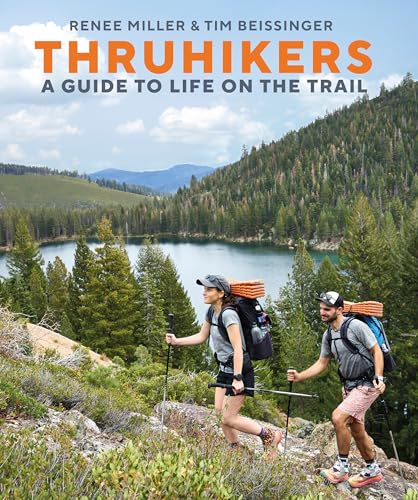
Why it wins: The highest rated book on this page, built by a couple who have walked the major American long trails, and it answers the questions the older manuals skip: resupply boxes, town days, trail apps, what a permit process actually involves now. It is also illustrated in a way that makes the logistics legible rather than intimidating.
Pros
- Best average rating in this roundup
- Covers the modern logistics of resupply, permits and navigation apps
- Written by two people who have completed the trails they describe
- Genuinely useful illustrations rather than decoration
Cons
- Small review base compared with the famous titles here
- Assumes American long trails, so less use elsewhere
- Hardcover and heavy, so it stays at home
Social proof: See rating and reviews on Amazon.
Trade-offs and who should skip: The book to read before a first thru-hike. Skip it if you are not planning multi-week walking. Skip it if you hike outside the United States.
Scores: Performance 4/5 | Planning usefulness 5/5 | Ease of use 5/5 | Value 4/5
Grandma Gatewood’s Walk by Ben Montgomery — Best story
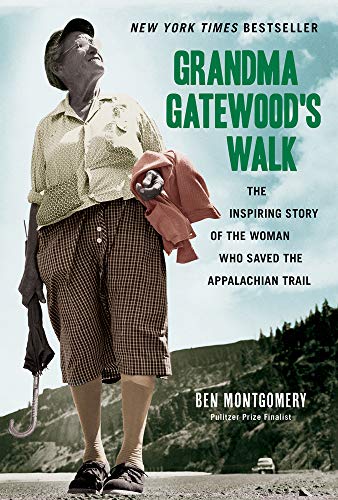
Why it wins: The account of Emma Gatewood, a 67-year-old grandmother who in 1955 walked the Appalachian Trail alone in canvas sneakers carrying a homemade sack, having told her family she was going for a walk. It is reported history rather than personal reflection, and it quietly demolishes the idea that you need the right equipment before you are allowed to start.
Pros
- More than ten thousand ratings at a strong average
- Journalism with sources, not a reconstructed memory
- Doubles as a history of how the trail was nearly lost
- Short, and the kind of book people pass on
Cons
- No practical instruction whatsoever
- Gatewood’s methods are a story, not a template to copy
- The domestic violence in her earlier life is difficult reading
Social proof: See rating and reviews on Amazon.
Trade-offs and who should skip: The one that makes people want to go. Skip it if you want a manual. Skip it if you would rather avoid the darker biography.
Scores: Performance 5/5 | Planning usefulness 1/5 | Ease of use 5/5 | Value 5/5
Wild by Cheryl Strayed — Most read, least instructive

Why it wins: Seventy-six thousand ratings, more than everything else on this page put together, and the book that pushed a generation onto the Pacific Crest Trail. It is also the lowest rated of the five, and the reason shows up plainly in the reviews: readers who came for hiking found a memoir about grief and a narrator who set off badly prepared.
Pros
- The largest readership of any hiking-adjacent book by a wide margin
- Honest about fear, blisters and being out of your depth
- Better as writing than most of the genre
Cons
- Lowest average rating here, largely from readers expecting a trail book
- The hiking is the setting, and bereavement is the subject
- Her preparation is an example of what not to do
- Long stretches have nothing to do with walking
Social proof: See rating and reviews on Amazon.
Trade-offs and who should skip: A good memoir and a poor guide. Skip it if you want anything you can apply. Skip it if you have no patience for the grief narrative.
Scores: Performance 3/5 | Planning usefulness 1/5 | Ease of use 5/5 | Value 4/5
100 Hikes of a Lifetime by National Geographic — Best for dreaming

Why it wins: A large-format survey of a hundred trails around the world with the photography you would expect from that name, and it is on this page as the clearest illustration of the trade-off. Spread a hundred hikes across six continents in one volume and each gets a spread: enough to make you want to go, nowhere near enough to go on.
Pros
- Excellent photography and production
- Genuinely global rather than American by default
- Works as a gift for someone who hikes
Cons
- A page or two per trail, so you will need a real guidebook anyway
- Too large and heavy to travel with
- No maps at a scale you could navigate from
- Several entries need permits or guides it does not explain
Social proof: See rating and reviews on Amazon.
Trade-offs and who should skip: Inspiration, not information. Skip it if you wanted something to plan from. Skip it if coffee table books irritate you.
Scores: Performance 4/5 | Planning usefulness 1/5 | Ease of use 3/5 | Value 3/5
Quick compare
- Most useful: Skurka’s gear guide, gear references are dated
- Best modern how-to: Thruhikers, American trails only
- Best story: Grandma Gatewood’s Walk, no instruction in it
- Most read: Wild, a grief memoir rather than a trail book
- Loveliest: 100 Hikes of a Lifetime, a page per trail
One thing to know before you buy anything from the planning half of this shelf. Guidebooks go out of date in a way that memoirs never do: trailheads close, road access washes out, permit systems change and quotas get introduced, and a book printed five years ago will send you confidently to a car park that is no longer there. Check the edition and the year before you order, prefer a regional guide over a national one when you want to walk rather than browse, and confirm access with the managing agency in the week before you go. The stories on this page will still be true in twenty years. The logistics will not be true next season.
As an Amazon Associate, I earn from qualifying purchases.